HEAR IN TEXAS
Dr. Maggie Neyman
Doctor of Audiology
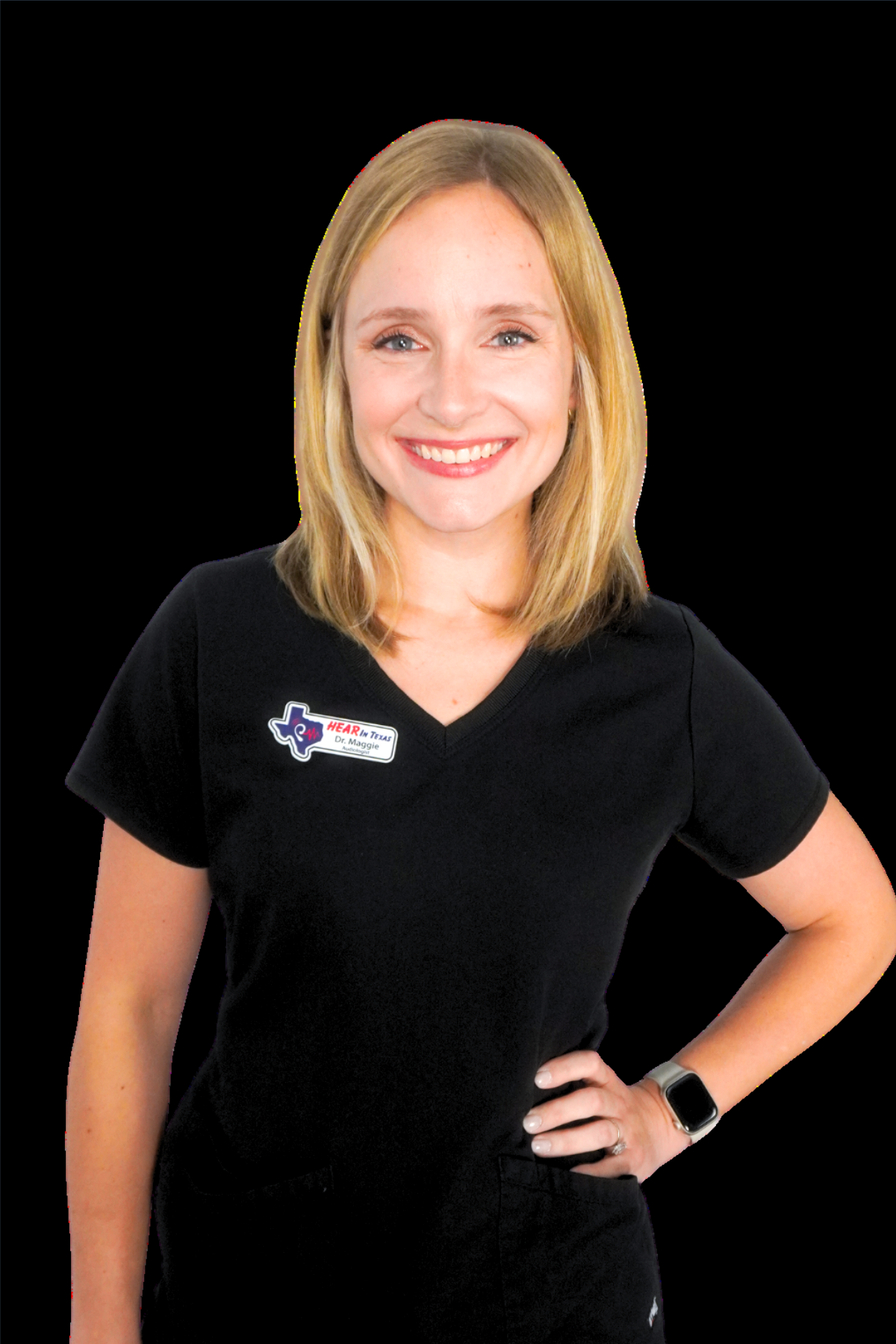
Dr. Maggie Neyman earned her Doctor of Audiology degree from Vanderbilt University School of Medicine in 2018, after earning a bachelor's degree in Communication Disorders from Auburn University in 2014. Maggie was inspired to pursue audiology as a career by her experience growing up with bilateral hearing loss.
Diagnosed at the age of 3.5 with moderate to severe hearing loss in both ears, her entire world opened up once she started wearing hearing aids. During college, she shadowed her own audiologist and fell in love with the profession and never looked back. As a hearing aid user for over 30 years, Dr. Maggie has a unique perspective on clinical audiology. She has been an audiology patient for most of her life and is now the provider.
Having previously been a VA audiologist, Dr. Maggie’s main patient population at Hear in Texas is Veterans through the Community Care Network. Her primary clinical focus is adult diagnostics, hearing aids, and tinnitus management. Dr. Maggie enjoys getting to know her patients and working side by side with them and their loved ones to create individual solutions to their unique communication challenges and lifestyles
#1 - Motivation Is Key
Next, in the early 2000s, my grandmother came to live with my parents. The audiologist in me quickly identified that she could not hear very well. With some convincing, I tested her hearing and found she indeed had a hearing loss.
She was shocked and believed that I was wrong. In her mind, she could hear just fine. So, to prove my point, I fit her with hearing aids. Yes, she could hear better, but she refused to wear them because she could hear just fine. This taught me that the patient must be motivated to hear better.
#2 – Preservation Should Begin Early
In the mid-2000s, my children were finally of age to go to the movies. I never realized how loud movies are until I looked over at them and they were holding their ears. This makes it very hard to eat popcorn! I made them a pair of custom ear plugs, as standard foam plugs are difficult to wear and not as comfortable for small ears. The next movie was a totally different experience. Later, as they got older, they wore these custom ear plugs when they went hunting. This expanded my awareness about preserving hearing. It is never too early to wear hearing protection.
#3 – A Win For The Industry
Fast forward to 2007, finally, the technology was available to help my father! I fit him with a pair of open, receiver in the ear hearing aids and boy, what a difference. Now, he didn’t ask for repetition quite as much and conversations were much more pleasant. This was a huge win for the hearing industry, because many people, like my father, had normal hearing in the low pitches and poor hearing in the high frequencies. I quickly learned that I could now help people who were told they could not do anything for their hearing loss.
Next, my brother is complaining that my sister-in-law often misunderstands him. She holds a leadership position at her job, and it is important that she gets facts and figures correct. When I tested her hearing, I found she had an atypical hearing loss in one ear and normal hearing in the other. I recommended she see an ear, nose, and throat doctor because of the uncommon asymmetry. When she was medically cleared, I fit her with one hearing aid. She is now able to localize sounds better, has better hearing in noise and understands speech much more clearly. This experience reiterated that hearing loss is not an old person’s problem. It can affect anyone at any age, and if there is a solution for the problem, why would someone suffer in silence?
#4 – I Saved Her Life
Now, it’s late 2016 and my sister keeps complaining that her ear feels plugged up. I look in her ear and saw what appeared to be bubbles behind her ear drum. I knew what that meant, or so I thought. What I expected was a low pitched, treatable hearing loss as is common with people that have fluid in the middle ear, and what I found was completely normal hearing. So, I did a tympanogram, expecting to see a flat tracing, as is common with middle ear fluid, but what I got was a completely normal tracing. Things were not adding up. Her complaints and what I could see were not what was showing on the test. I immediately arranged for her to see an ear, nose, and throat doctor. She ended up having a cerebrospinal fluid leak and had to have a craniotomy to repair it. Wow, I saved her life!
Most recently, when I met my now husband 3 years ago, he was just about to be fit with his first pair of hearing aids. He had to turn his good ear to hear me and I had to speak up. He was never aware that he forgot to turn off his blinker, as he could not hear it. When he got the hearing aids, I remember him telling me that he couldn’t believe the wind made a sound. He was surprised that he was able to compensate for so long. He mentioned all the misconceptions, such as arrogance and rudeness, people had about him because he did not respond to them. He never even knew they were speaking to him.
It has been interesting to test out new technology in our everyday life. His favorite pieces of technology include the TV streamer that routes TV directly into his hearing aids and the remote microphone that I can wear in noisy restaurants or he can put in the middle of the table at meetings. And, yes, I too do some things I’m not supposed to like walk or turn away while speaking to him or ask him a question when he is in another part of the house.
I have first-hand experience in protecting hearing, detecting ear-related problems, treating hearing loss, and living with hearing loss. A hearing loss affects the entire family. I am sensitive to all aspects of hearing loss.
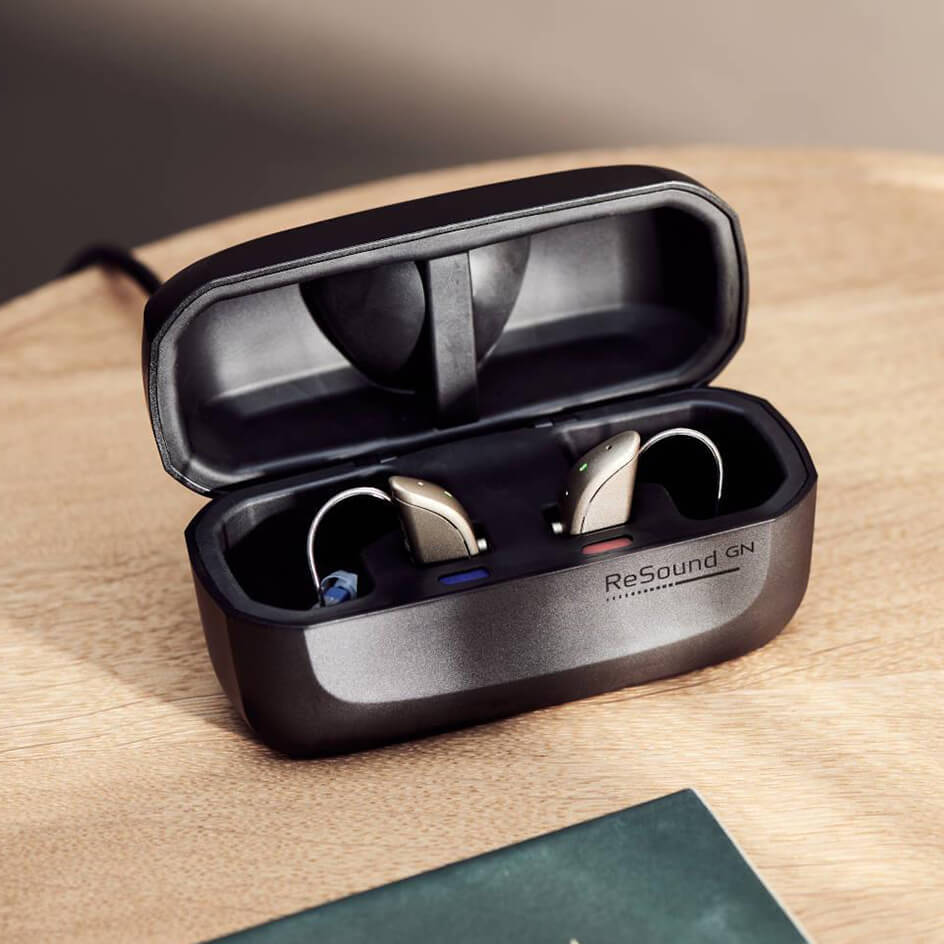
Helping You to Choose the Right Hearing Technology through our Partnerships with all Manufacturers
With each level of hearing loss and person that we help having their own unique set of circumstances, there is never a “one size fits all” approach.
That’s why we partner with every hearing aid manufacturer to ensure that we can always find the right solution for your unique needs.
This also means that we’re often front of the queue to get our hands on the latest hearing technology to ensure that you always have access to the latest developments.
Request A Callback
If you have a question or would like to speak to Dr. Sally to receive advice about your hearing or a loved one’s hearing, then you can request a callback.
You will then receive a phone call to discuss your needs, answer any questions that you may have, and offer no-obligation support/advice.
It would be wonderful to connect!